My Story.
A nine minute read. Longer if you hovertapNOTE 01 OF 29Like this. Anything dotted adds a bit of depth..
My entire career is one move: an obsessive, somewhat compulsive curiosity to understand the origin of thingsNOTE 02 OF 29Because taking someone else's word for it hardly ever works for me. I form my own opinions by treating the origin of things as a micro historical lesson, and the output of that habit is inventing or simplifying the status quo, continuously..
The origin
of things.
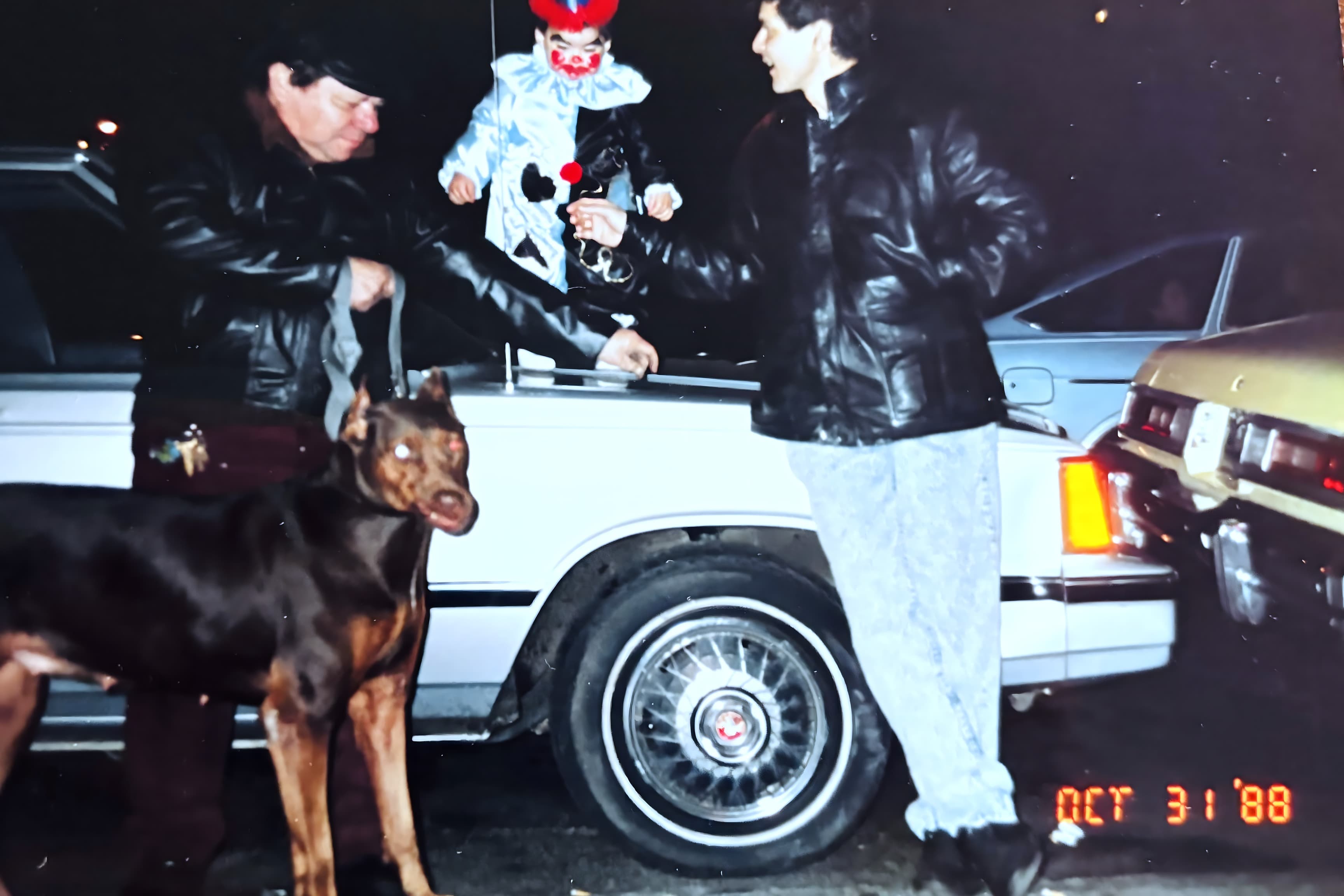
I was born at Lincoln Hospital in the Bronx, to parents who escaped El Salvador's civil war in the eightiesNOTE 03 OF 29The war ran from 1979 to 1992. It shaped everything about my family.. I was raised across Queens and northern Virginia in a multi generational home where everyone worked, because if they didn't, they didn't eat, and there was no shot at the dream they came for. Work was learned, earned, and modeled. They both arrived with degrees, a civil engineer and a special needs teacher, without the means to continue their education here. So in New York my dad worked at a Japanese restaurantNOTE 04 OF 29Japanese East, an izakaya in Manhattan. My dad tells the story that it carried one of the first seals of authentic Japanese cuisine, because the kitchen cared that much about craft and quality. He worked inside that standard of care, and it reached me through him before I had a word for it. and my mom ran the register at a deliNOTE 05 OF 29Dad took the dinner shift and mom took mornings at the deli, on purpose: one of them was always home with me and my little sister. That care was a gift, and it stuck. I care to care. The right things should not be rushed; you make space for them.. She found her way back to teaching: preschool then, preschool still, and these days she is the school's Spanish teacher too. By my teens my dad was working three jobs at once, a concrete pump for Cardinal Concrete by day, Papa John's deliveries at night, the Washington Post before sunrise. He worked hard with his body. I get to work with my mind. The work ethic is ingrained in me, by both of them. At twelve I carried water up the stairs of new build homes for my godfather's tiling crew, so the men could mix thinset and grout. I swept the sites. I handed them what they needed and learned how to tile. At nineteen I took a one way ticket to San Diego. Two bags. No job. Seventy dollars to my name and rent due in 30 days. My parents thought I wasn't serious. They never tried to stop me either. I was serious, and I was also distancing myself from a heartbreak that made home heavy. It was the first move that felt like growing up. The idea became the reality.
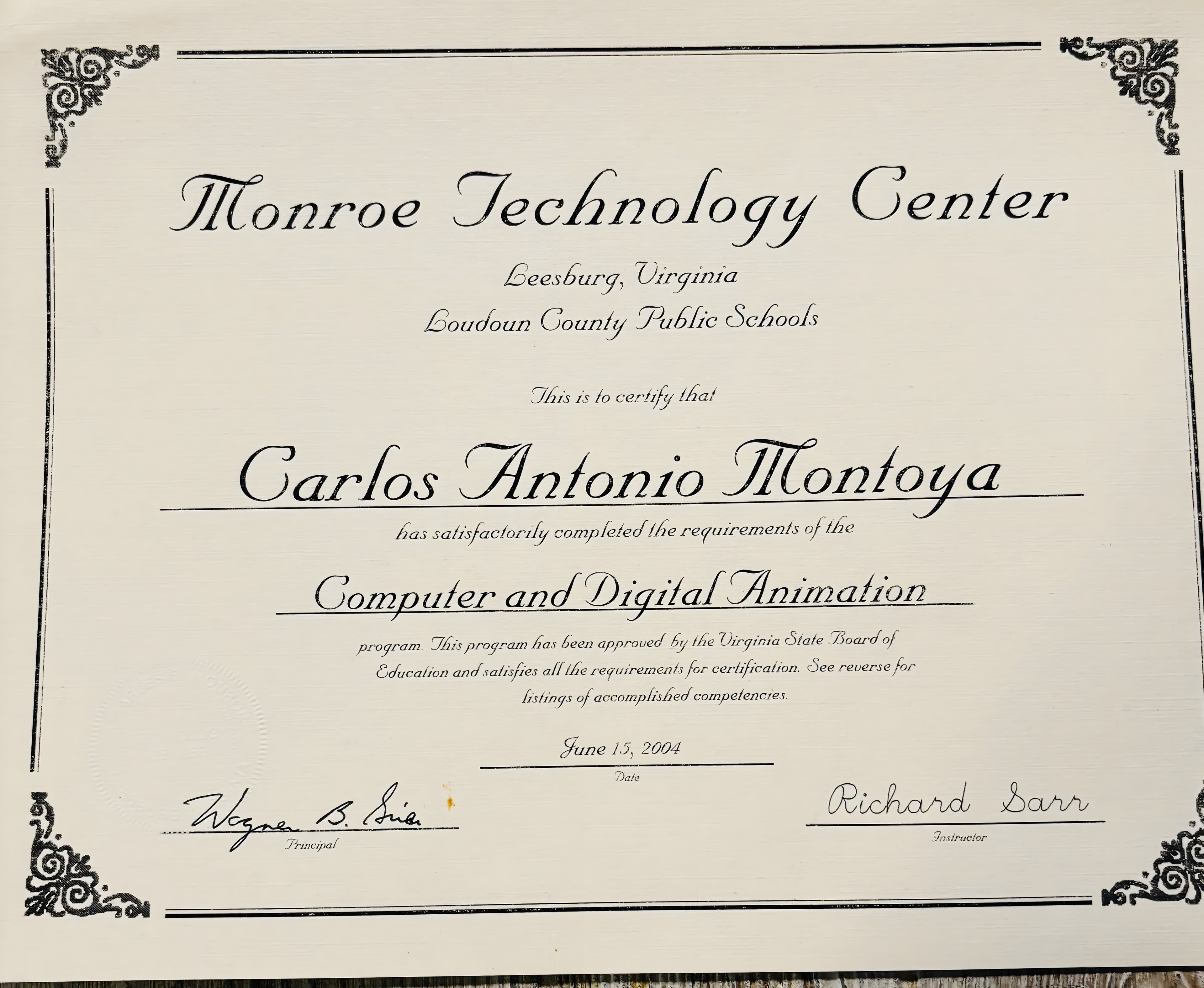
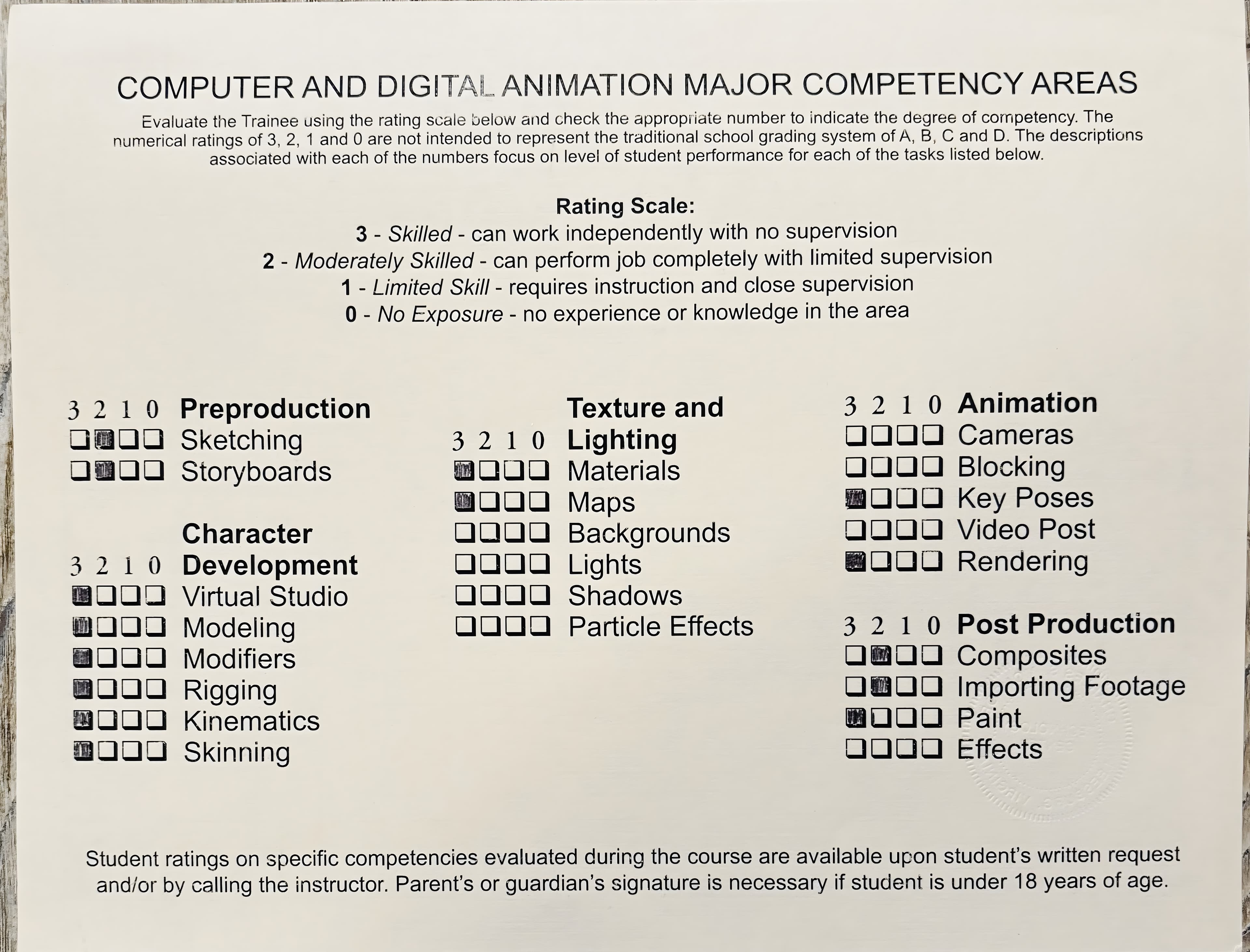
Art found me before any of it: Popeye the Sailor Man in early elementary, a friend in fifth grade whose superhero comics I drew alongside, a classmate in sixth whose animal illustrations amazed me. Animation is what brought me to schoolNOTE 06 OF 29Most of my high school electives went to a year long Computer and Digital Animation course at Monroe Technology Center in Virginia. My dad recently sent me the certificate. That is where art and technology met for me. Architecture ran a close second, because I loved art that was useful. And what I gravitated to then, history, math, computers, art, is what I do now: design, technology, history., because I wanted to be part of Pixar. The shorts did it: a place that cared to make something magical just for the sake of the story. The animation was almost second. I love animation because it can build worlds that are impossible in any other medium. It frees the storyteller to tell stories that have no business existing, other than for the sake of it. The Pixar shorts proved that to me first. And you earn that right frame by frame, the way the early Disney artists did, the way Miyazaki still does. Every frame a painting.NOTE 07 OF 29The phrase belongs to Tony Zhou and Taylor Ramos's video essay series, where I first met it. In animation nothing is accidental. The same is true in design: trust is earned in what the customer sees, in the experience, and in the invisible, the intentionality of a grid and a system. It is why I love animation still, animeNOTE 08 OF 29Frieren is the favorite right now, for its slow and intentional storytelling. to be exact these days. I took two runs at art school and both times the work won. The first time I was running a bathroom and kitchen remodeling company. The second time a forty dollar an hour contract turned into a design career. I learned everything on the job, with high stakes, in real time.
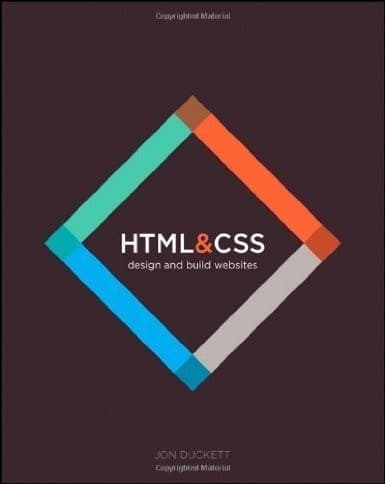
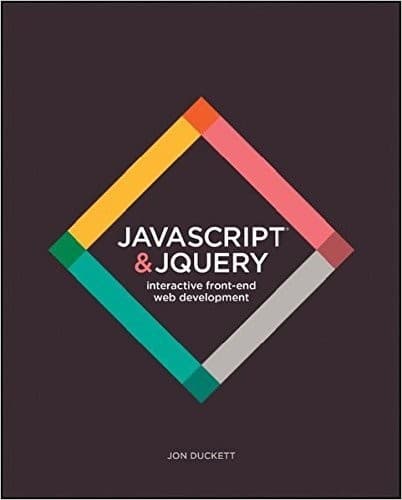
When design moved onto the webNOTE 09 OF 29Graphic designers were handed screens, and Flash won the first decade because it kept the freedom of paper: every pixel yours, no grid required. Then in one month of 2010, Jobs published Thoughts on Flash and Marcotte named Responsive Web Design, twenty six days apart. The free canvas ended. The systems web began., that same need to understand the origin of things sent me to Jon Duckett's HTML and CSS booksNOTE 10 OF 29The full titles mattered: HTML and CSS, Design and Build Websites. JavaScript and jQuery, Interactive Front End Web Development. Design and interactive, right on the covers. I trusted beautiful books because beauty had always been the tell: weekends as a kid at Japanese stationery stores in New York, my dad handing me kitchenware manuals because those were beautiful too. I wish I had collected them., picked half because they were beautiful, and the other half because they were functional: code displayed beautifully. That move is my whole career: go to the work, muddle and wrestle until the understanding is mine. At Pinger I shipped five apps in a yearNOTE 11 OF 29That was the year we pivoted into single use messaging apps, staying in the wheelhouse Textfree and Pinger built. Convergently, Facebook Messenger was going multimedia: stickers, GIFs, video. while nights and weekends I rebuilt my fundamentals on an open source curriculumNOTE 12 OF 29hackdesign.org, built by design leaders sharing what they knew in public, for free. That generosity never left me. It became my design foundation and set the tone for how I mentor.. The stakes of a real deadline are how I learn best. I need a real project, a real deadline, real stakes on the line.
And from the beginning I was chasing fidelity. The mobile explosion handed me the animator's job after all. The first iPhone was 320 by 480; no room to show everything, so motion and gesture carried the load. I had learned on the classic bouncing ball, and my knack was objects, not characters. At Pixar today I would be animating the objects and scenes around the characters. In software, that is exactly what I got to do. Apple Keynote animationsNOTE 13 OF 29This was the Quartz Composer era. Facebook prototyped Home and Chat Heads in it, and I used it too. But Keynote had Magic Move, and Magic Move let me show the motion in minutes. when static mocks couldn't say it. A Webflow componentNOTE 14 OF 29This was at Atlassian. Webflow was the closest thing to code I could wield without taking the time to write it at scale. handed to engineers instead of a spec. Code has always been the source of the medium, and I have spent a career getting closer to it, because people give their best feedback on ideas they can experience and feel viscerally.
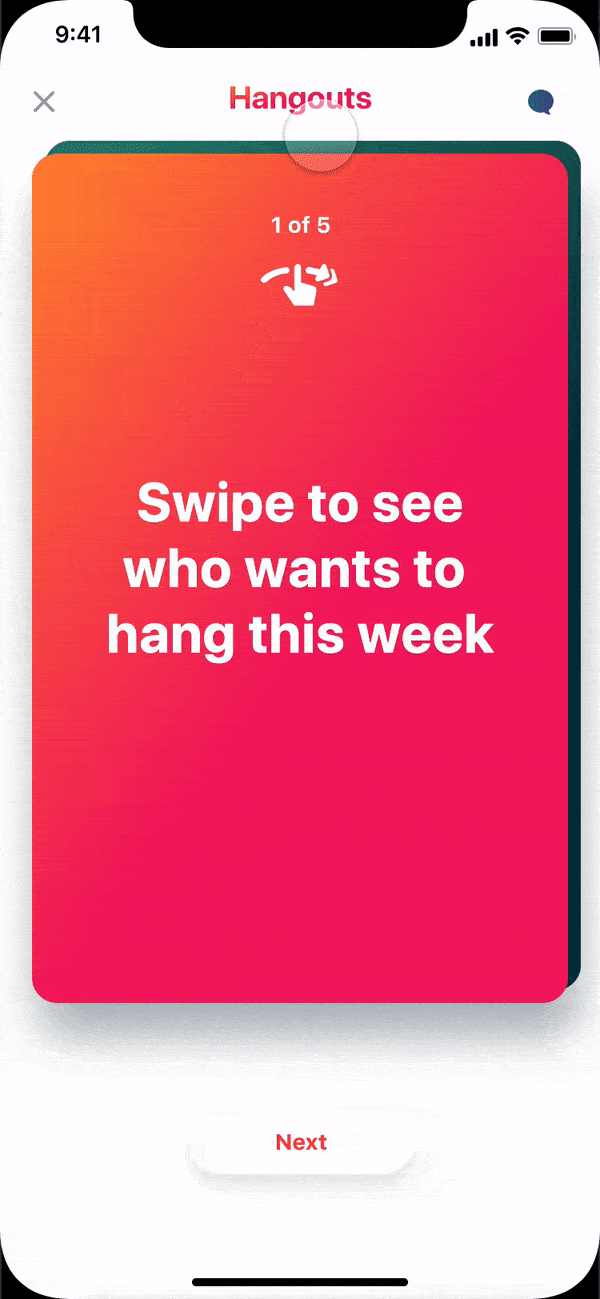
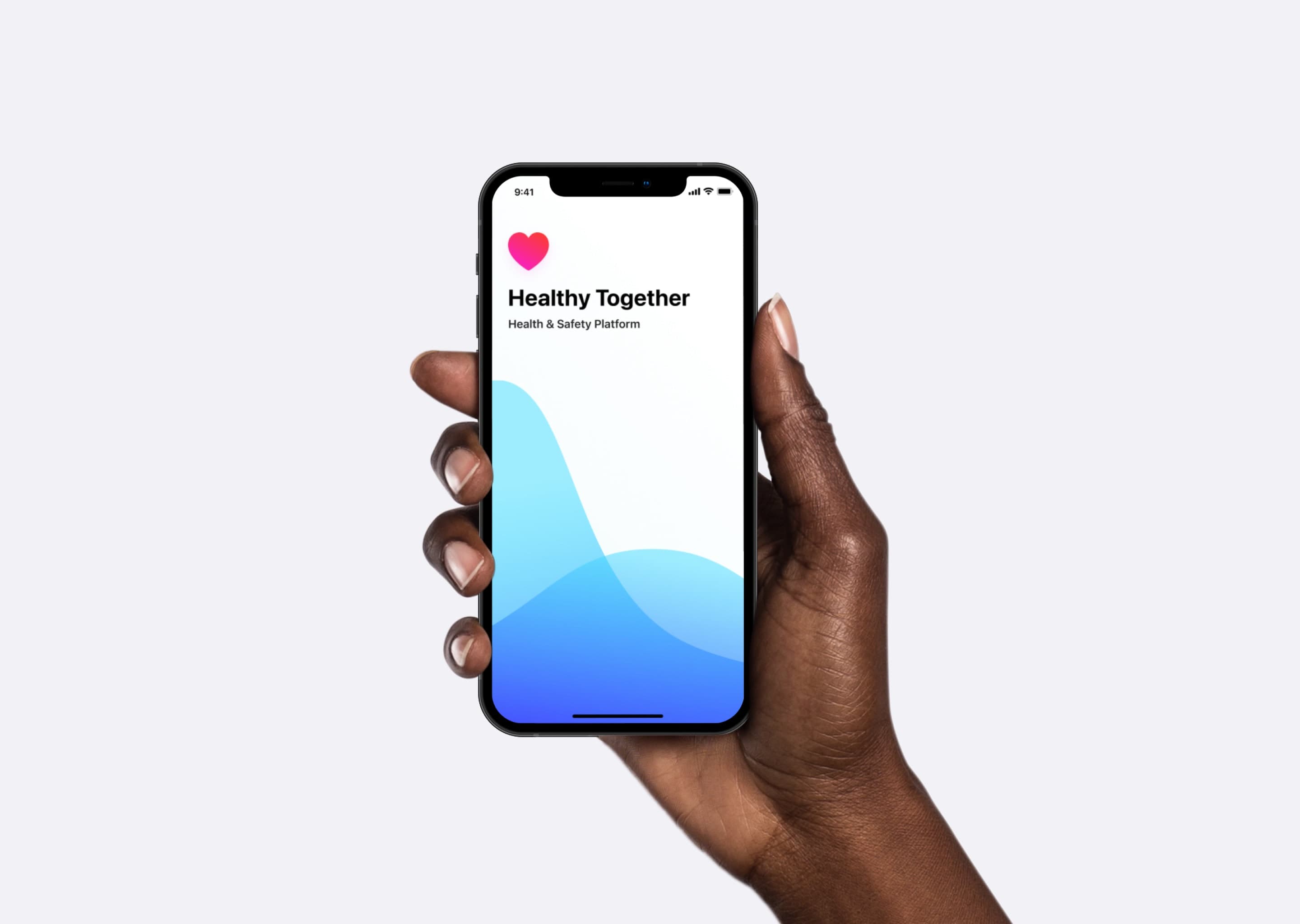
Atlassian taught me scaleNOTE 15 OF 29Four of us grew into a marketing design team of forty plus, running on what we took from Creativity Inc: a braintrust, and a practice we called design sparring.. Juxta Labs put a question in my head that I carried for years: what was the shape of my impact? How much of it was invisible. How much was tactical. How much was my influence in the rooms where we talked about making, and how much was the things I actually made. Then COVID answered it in public. Our social appNOTE 16 OF 29I invented Hangouts with the team, our first project after Twenty acquired Mappen: a blend of SnapMaps and Tinder that matched teens anonymously on the intersection of people and activities, so no one spent social capital to say I want to hang out. A bet that the antidote for the most connected, loneliest generation is people, in person. COVID killed the premise at birth. died the day hanging out in person died, and through one investor call, Utah asked for a contact tracing app, because we had technology that could be repurposed for exactly this need. I heard about it Wednesday. I designed the pitch Friday. We had a contract Saturday, and 28 days after the pivotNOTE 17 OF 29That speed had a backstory. At Twenty I had pioneered our remote first design practice before COVID forced anyone's hand: live cursors in Figma plus Zoom, treated as co designing in the same room, adopted against real skepticism while we were still in office. And the design system I had built was durable on purpose, so the pivot reused proven blocks. We did not skip a beat. we were in both app stores. The second state in the nation with a COVID app, the first to launch on iOS and Android on day one, and the first state app in the country doing Bluetooth proximity tracing. We shipped twelve days after Apple and Google announced their exposure notification system, a month before their API existed, so we solved it at the app layer with GPS and Bluetooth. Watching the OS level approach become the standard is what convinced me: this class of problem has to be solved at the platform layer, not the app layer. That app earned 4.9 stars across 220 thousand reviews, and the platform now serves five million people across government health programs. I led four senior designers through the merger that built that team. When my job drifted into pitch decks, I left to get back to the craft. That is a pattern of mine: I choose to make the artifacts that do the selling instead of the pitch decks that sell. Merit over title. Lived value over perceived value. Though there is a place for a well placed deck.
Merit over title.
Taste has versions.
Dropbox made the pattern a title. Principal on the portfolio design team, the group that gets the ambiguous, cross cutting vision work. When a CEO level sprint needed the future of AI on mobile to feel real, I decided to build it native. I had never built a Swift app, but I knew I could do it, so I built it in a weekend, because static screens could not answer what the room was asking. The AI layer ran on demo data by design, so I could move fast and the room could judge the feel instead of a promise. It was structured so real accounts could drop in for customer testing next. The real AI was the build method, Claude Code and Codex running through my own work systemNOTE 18 OF 29The work system is my own harness around a general model. I built it because models forget, back when context windows topped out around 250 thousand tokens: a memory layer that teaches any leading model the rich context it needs to be accurate and actually useful. AI leaders are converging on owning your own harness, a second brain, right now. Mine is already built, in my own terms.. It carved out the importance of mobile at Dropbox for a team that was over indexed on the web experience. And plenty shipped along the way.NOTE 19 OF 29Multi product checkout that let Dropbox sell standalone apps without the traditional account. The upsell system that shipped into core FSS with a measured revenue win. DocSend virtual data rooms and top of funnel work, where I coached a senior designer into a portfolio grade project. I index on the AI native work. The shipped work sits underneath it. The artifact did the selling for itself. The iOS engineers asked for the repo, the whole mobile experience team got added, and the prebuilt app made the rounds internally. Along the way I mentored 25 plus designers from AI trained to AI native. I am the sole inventor on a patent filing in AI context engineeringNOTE 20 OF 29I invented it while the industry was still finding the language for what context engineering even was. Honest context: companies with means, like Dropbox, proactively lay claim to invention. Undersourced people invent all the time and never file. I am an inventor on paper partly because I worked somewhere with the means to claim it. It is cool. The context matters. from that chapter, because I wanted to prove to myself that I could watch a market and invent something genuinely useful in it, and that I could do the design and the engineering myself, assisted with AI, for the first time.
March 2025 is when AI stopped being just a tool for me. I remember the day. A week long build competition, a runner up out of nearly a thousand entries, and one realization: AI is a powerful tool in the hands of someone with a strong point of view and tasteNOTE 21 OF 29Ira Glass named the gap: we get into this work because of taste, and our skills lag the vision in our heads. The same gap opens when people vibe a solution with AI. Without the fundamentals (typography, visual design, reps of moving pixels by hand), the output lands as AI slop. The people best positioned to steer AI are the ones who closed the gap manually first., defined and curated by lived experience. I happened to be standing on both sides of it, designer and engineer. Fluency is the word I use, and I mean it the way language immersion works. You are not fluent until you choose to be brave and pay the cost of sounding wrong in front of everyone, and survive it, and keep talking. I have made that choice at every tool shift of my career, Adobe FireworksNOTE 22 OF 29Fireworks was my choice, not the default. Designers a generation ahead of me ran Photoshop and Illustrator because they came up through traditional graphic design. I got to choose, and I chose Fireworks. to Sketch to Figma to the terminal, because that is how you stay ahead of the curve: by being good at not being good. Training goes stale the day it ships. Fluency doesn't.
And so I went all in. The same compulsion to understand the origin of things led me to HamsterNOTE 23 OF 29I was one of the first to see the value of the tool that pioneered plan mode for leading models, because I had just felt the pain of not controlling the craft and output of AI at that hackathon. I chased it to its source, reached the team inventing it, and offered to work for free. tryhamster.com, where I was the fractional design founder as the company formed. The work raised an unannounced seed round. I went out again to learn for myself. It is the pattern again: I chase experience.
In May 2026 Dropbox reorganized its org and my role went with it. I leaned into Los Montoya Design Co, the LLC I formed in 2018. It has always been my vehicle to learn and to earn. I built an AI lab at my houseNOTE 24 OF 29I ordered the Mac Studio in early March 2025, two weeks before the competition even began, and specced it for where models would be in a year, not where they were, specs Apple was not selling off the shelf. The bets: sovereignty over this new intelligence on my own hardware, open models getting stronger, and my own evals over general ones. Local models do the bulk work, frontier models make the judgment calls. I see patterns early, and I have learned to be brave enough to follow them through. and pointed it at an old conviction with a new edge: taste has versions. I have been talking about the gap between taste and skill since my podcast days. The lab is what finally let me treat my own judgment as data. If you can articulate judgment objectively, you can version it over time. So I built a rubric-driven evaluation pipeline across 165 Figma files from fifteen years of work. One hundred twenty-four files yielded 21,678 candidate nodes; a first review rendered 592 tiles, while a separate 116-tile labeled gate lets me measure frontier judgments against my own rationale. I versioned the rubric and kept myself as the final gateNOTE 25 OF 29It is a v1 and I say that on purpose. The judges still disagree with me in ways I am learning from, and the rubric is mid revision. Versioning taste means shipping the imperfect version and improving it, visibly.. This site is what that system built. It is not a gallery of the work. It is the work, alongside the curated objects, the case studies, and the thoughts.
The practice runs the whole house now. The mail runs through a Ricoh scanner into a triage system I built, and agents chase the follow ups. My son's mornings start with a schedule built from the school district's Canvas API, access I had to ask the district to open. And when my mom started asking a chatbot about her diet, I opened voice mode and taught her two things in Spanish: what sycophancy isNOTE 26 OF 29The agreeableness of an AI. It will tell you your diet is great because you want to hear it. She needed the word before she could see the behavior., and why one endless chat forgets. She didn't have the vocabulary to ask. Most people don't. Bringing this to people who don't know what to ask for is the privilege and the job.
The noticing.
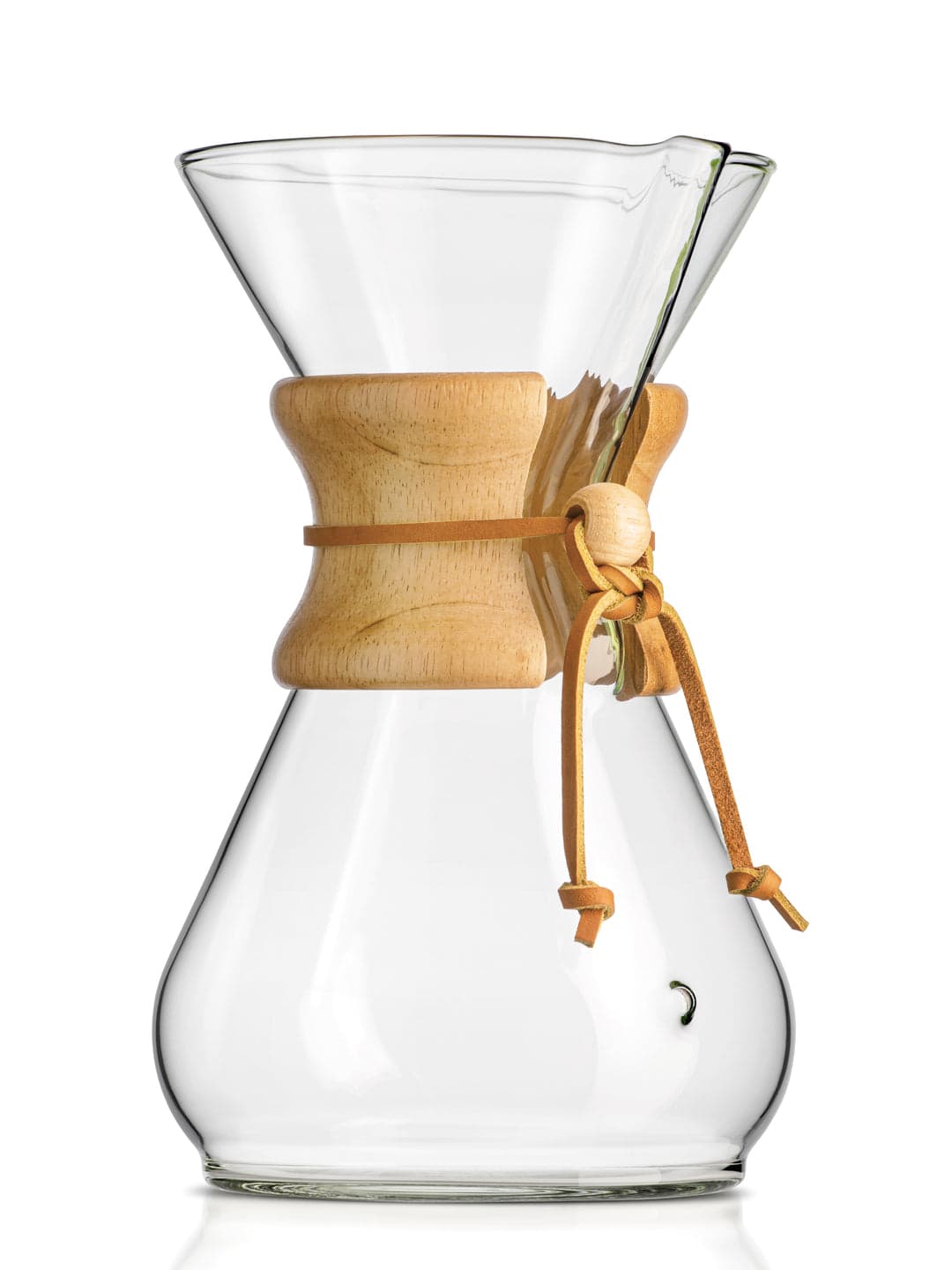
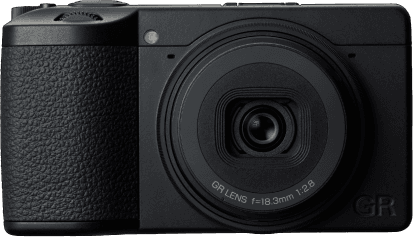
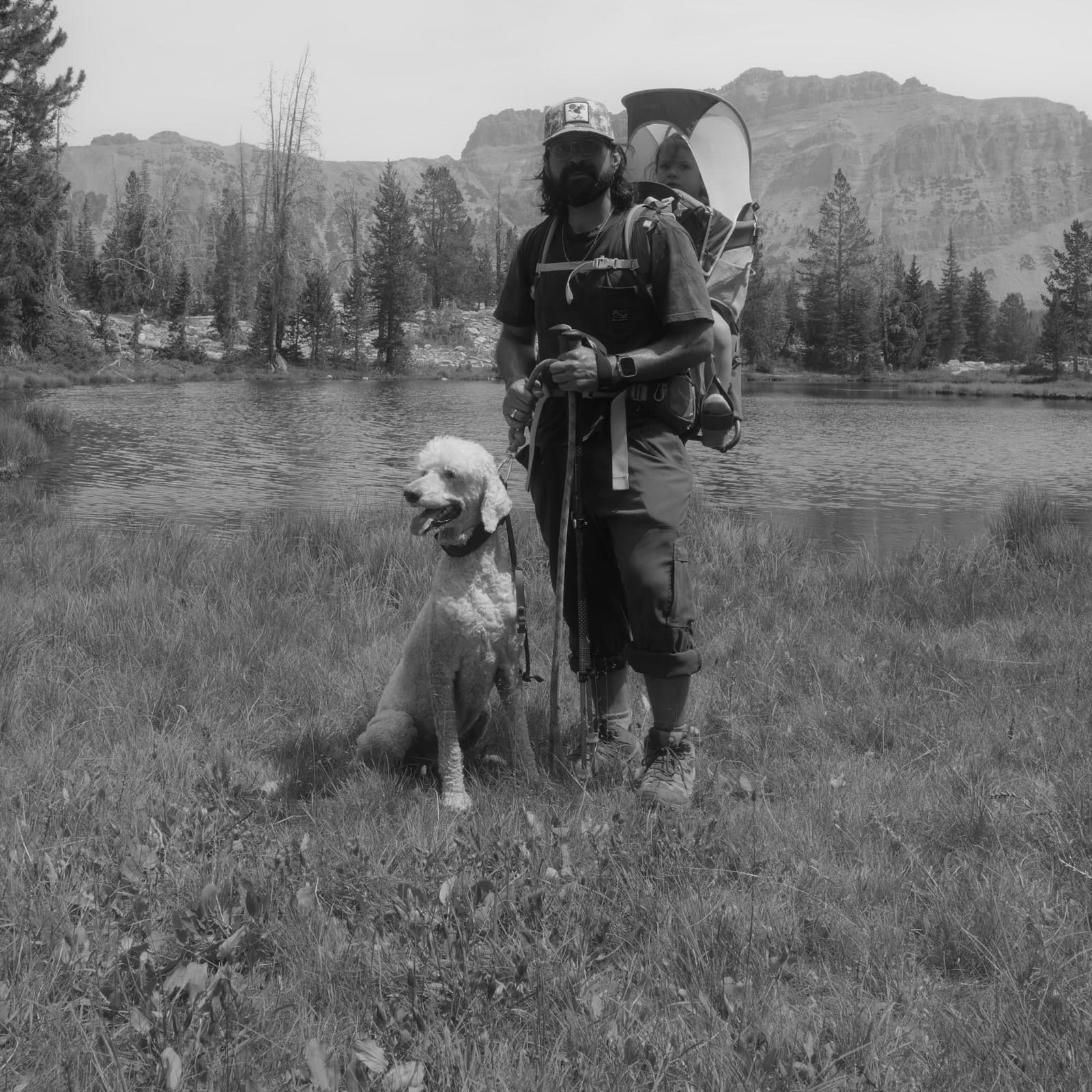
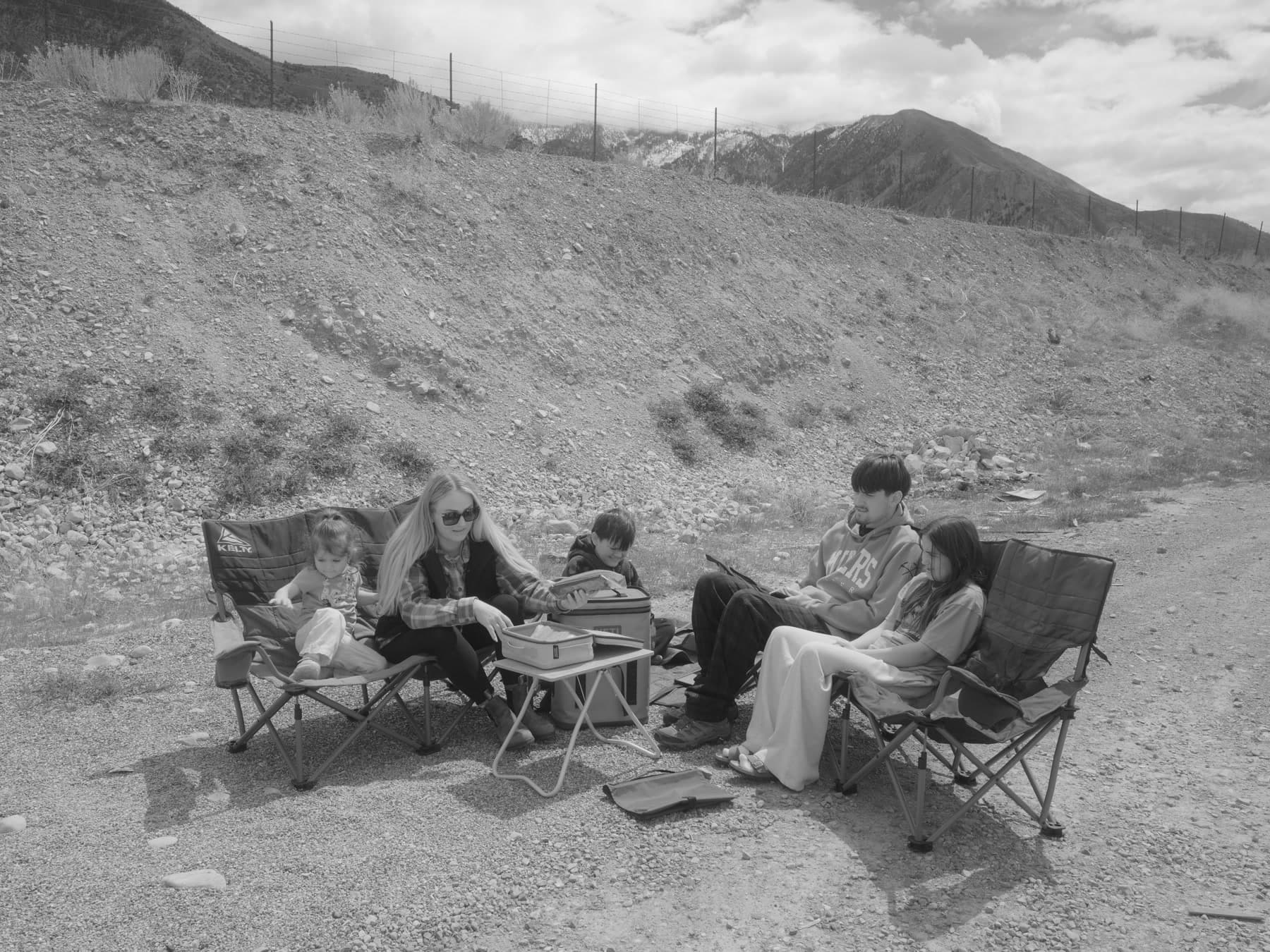
Off hours I am a husband and a father. Brittney and I are raising four kids, Stone (17), June (13), Cruz (10), and Amaiya (3), in Park City, by way of New York, Virginia, California, and Hawaii. Every morning I brew with a Chemex and the bean of the month, for myself and for guests, recreating what SightglassNOTE 27 OF 29I found it while working out of Atlassian's old San Francisco HQ in SOMA, at the corner of 7th and Harrison, the same corner where The Nightmare Before Christmas had been filmed. Animation kept finding me: at Serena Software I had worked right next to DreamWorks. The Sightglass is still there. The Atlassian office has moved on. taught me early in my career: the feeling of a parallel industry where taste matters and care matters, of people who, through lived experience and experimentation, formed strong points of view on what great tastes like. It is why parts of this story were written at Urban SailorNOTE 28 OF 29Park City's vinyl listening bar and coffee roaster, a pop up that earned its first brick and mortar. I sit there to feel connected to the stories and experience of the people in a place., and why I shoot in black and white on a fixed lensNOTE 29 OF 29A Ricoh GR, monochrome sensor only. No color to hide behind, no zoom to reach with. A fixed lens makes you compose with your feet., because taste comes from noticing and noticing is a practice. I am pulled to be still. I am pulled to watch. I am pulled to notice. I am pulled to move. Compose. Take one frame, sometimes two. Notice first, then compose what's noticed. This is how I design too. I notice, then I visualize an artifact to build shared understanding with the people I am working with. To find the shape we agree on or disagree on around the hunch, the problem, or the beginnings of a solution. Why am I telling you all of this? Because the noticing is what walks into the room with me.
I am pulled to the experiences that teach me to notice: beautiful places, beautiful objects, sounds, music, words, people, friendships. It is the pursuit of living a beautiful life. When it is my turn to make something for a person, I pull from that corpus, curated intentionally, so the inspiration I reach for has a source I know intrinsically, and what I make comes out useful and brings a little peace to the people who meet it. Designer, curator, and steward.